Student ERP Portal Pay Online Computer Centre Library राजभाषा / Rajbhasha
Indian Institute of Science Education and Research Berhampur
भारतीय विज्ञान शिक्षा एवं अनुसंधान संस्थान बरहमपुर
ଭାରତୀୟ ବିଜ୍ଞାନ ଶିକ୍ଷା ଏବଂ ଗବେଷଣା ସଂସ୍ଥାନ ବ୍ରହ୍ମପୁର
An Autonomous Institution under the Ministry of Education, Government of India

Biography

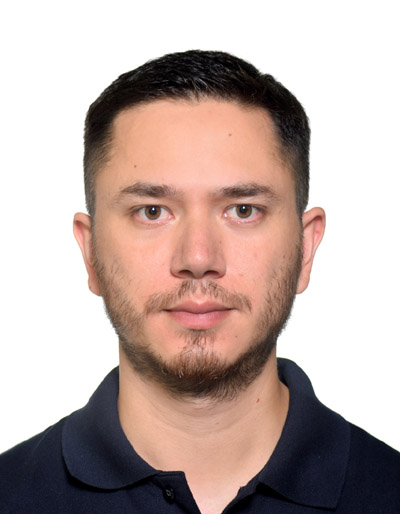
Dr Andrew Elohim Laloo is a microbial ecologist and environmental biotechnologist whose career bridges wastewater treatment, soil and peatland microbiology, and the intricate roles microbes play in greenhouse-gas dynamics. He joined the Department of Biological Sciences at the Indian Institute of Science Education and Research (IISER) Berhampur as Assistant Professor in August 2026, following a postdoctoral fellowship at the National University of Singapore’s Singapore Centre for Environmental Life Sciences Engineering (SCELSE) and NUS Environmental Research Institute. Andrew earned his PhD from the University of Queensland’s Advanced Centre for Water and Environmental Biotechnology. His thesis explored the mechanisms by which free nitrous acid (FNA) exerts biocidal effects on nitrifying bacteria—work that combined metagenomics, metaproteomics and microbial ecology under the guidance of Philip Bond, Amanda Nouwens and Zhiguo Yuan. A visiting stay at the University of Luxembourg with Paul Wilmes enriched this research and contributed to publications in Environmental Science & Technology. Earlier, he completed a Master of Biotechnology (Advanced) at UQ with distinction and a first-class honours Bachelor of Science in Biotechnology from North-Eastern Hill University, India. His research trajectory has moved from engineered systems to natural ecosystems. At NUS he investigated how iron minerals and microbial communities interact to influence carbon stabilisation and greenhouse-gas emissions in Southeast Asian peatlands, urban soils and waterways—using multi-omics approaches that integrate metagenomics, metatranscriptomics and metabolomics. These studies have appeared or are forthcoming in ISME Communications, Letters in Applied Microbiology, Science of the Total Environment and other journals. Earlier contributions advanced understanding of Free Nitrous Acid-based strategies for nitrogen removal and sludge treatment, work published in high-impact water-research journals.

Beyond the bench, Andrew has served as Junior Editor for Letters in Applied Microbiology and has mentored students and research assistants. He has delivered invited talks at ISME and other international forums, and holds awards including the Singapore–France Merlion travel grant for synchrotron work and the University of Queensland International Scholarship. 

With strong skills in molecular microbiology, bioinformatics and a growing focus on climate-relevant microbial processes, Andrew brings both depth and breadth to questions at the interface of microbes, minerals and the environment. His path reflects a sustained curiosity about how the smallest organisms shape some of our largest planetary challenges.

1. Laloo, A. E., Gupta, A., Verrone, V., Dubey, R. K., Taillardat, P., Nagasaijanani, R., Harahap, M. I. F., Banas, A. M., Banas, K., Bhattacharya, R., Min, S. L. S., Koh, Y. Z., Razali, F., Nastiti, N. I., Putri, E. S. K., Kurnianto, S., Deshmukh, C. S., Chakraborty, R., & Swarup, S. (2026). Iron stimulates greenhouse gas production in Southeast Asian peatlands. ISME Communications, ycag139. https://doi.org/10.1093/ismeco/ycag139

2. Laloo, A. E., Gupta, A., Verrone, V., & Dubey, R. K. (2025). Role of Fe and Mn in organo–mineral–microbe interactions: Evidence of carbon stabilization and transformation of organic matter leading to carbon greenhouse gas emissions. Letters in Applied Microbiology, 78(4), ovaf044. https://doi.org/10.1093/lambio/ovaf044

3. Verrone, V., Gupta, A., Laloo, A. E., Dubey, R. K., Hamid, N. A. A., & Swarup, S. (2024). Organic matter stability and lability in terrestrial and aquatic ecosystems: A chemical and microbial perspective. Science of The Total Environment, 906, 167757. https://doi.org/10.1016/j.scitotenv.2023.167757

4. Laloo, A. E., Wei, J., Wang, D., Narayanasamy, S., Vanwonterghem, I., Waite, D., Steen, J., Kaysen, A., Heintz-Buschart, A., Wang, Q., Schulz, B., Nouwens, A., Wilmes, P., Hugenholtz, P., Yuan, Z., & Bond, P. L. (2018). Mechanisms of Persistence of the Ammonia-Oxidizing Bacteria Nitrosomonas to the Biocide Free Nitrous Acid. Environmental Science & Technology, 52(9), 5386–5397. https://doi.org/10.1021/acs.est.7b04273

5. Semenec, L., Vergara, I. A., Laloo, A. E., Petrovski, S., Bond, P. L., & Franks, A. E. (2020). Adaptive Evolution of Geobacter sulfurreducens in Coculture with Pseudomonas aeruginosa. mBio, 11(2), 10.1128/mbio.02875-19. https://doi.org/10.1128/mbio.02875-19

6. Semenec, L., Laloo, A. E., Schulz, B. L., Vergara, I. A., Bond, P. L., & Franks, A. E. (2018). Deciphering the electric code of Geobacter sulfurreducens in cocultures with Pseudomonas aeruginosa via SWATH-MS proteomics. Bioelectrochemistry, 119, 150–160. https://doi.org/10.1016/j.bioelechem.2017.09.013


Upcoming